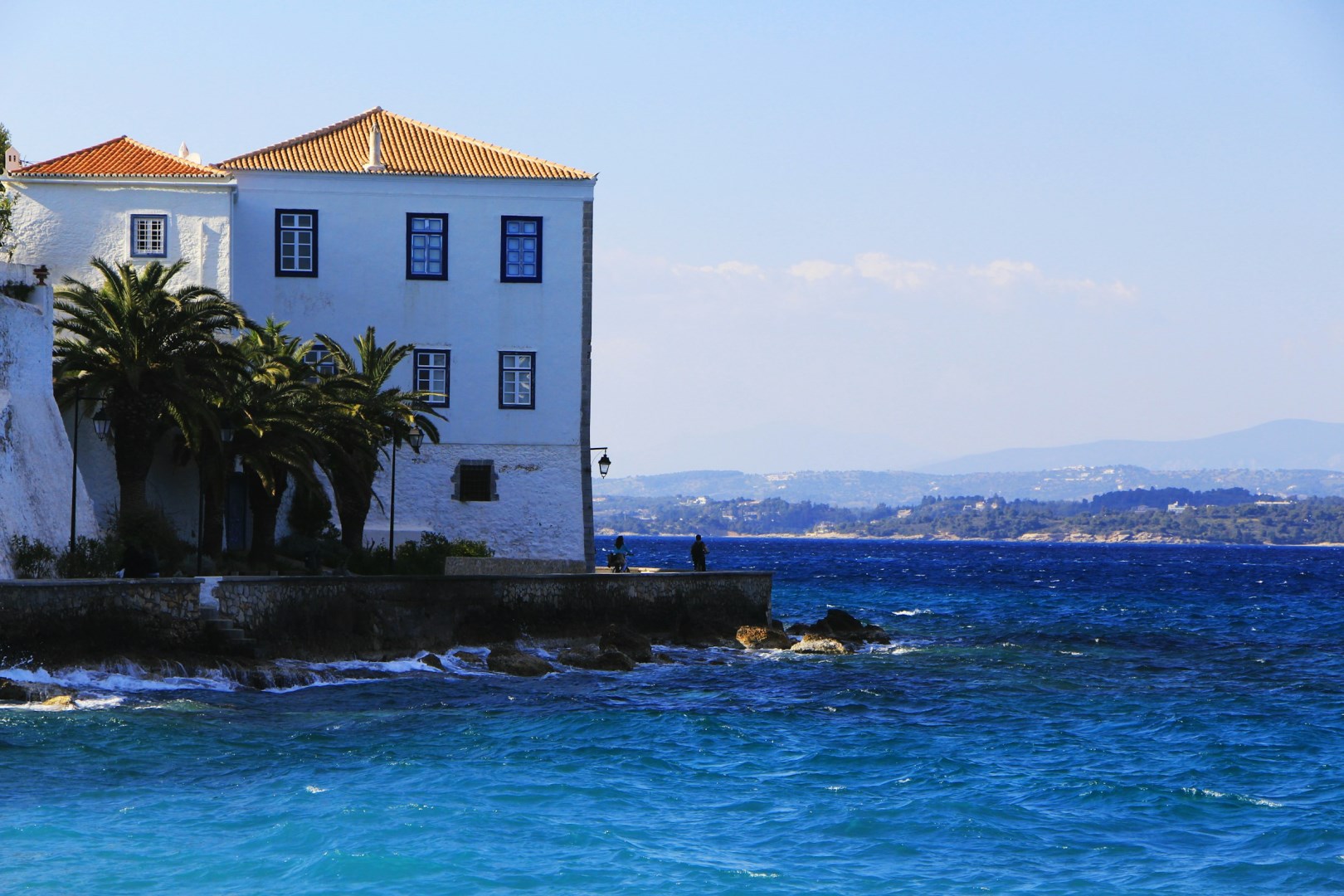
Spetses is a small island in the Saronic Gulf, separated from the Peloponnese by a narrow channel and known for its pine-covered hills, neoclassical houses, and maritime traditions. The main settlement, also called Spetses, curves around a sheltered harbor and waterfront promenade, with narrow streets extending into residential neighborhoods. Cars are restricted in much of the town, and traditional horse-drawn carriages remain a recognizable feature. The island’s proximity to Athens makes it a popular destination for short visits, while its compact size allows visitors to explore much of the coastline and countryside on foot, bicycle, or scooter.
Spetses has a strong connection with Greece’s maritime history, particularly the island’s role in the War of Independence. The Bouboulina Museum occupies the former home of Laskarina Bouboulina, a prominent naval figure associated with the struggle, while the Spetses Museum is housed in a historic mansion and presents archaeological finds and objects from local history. The annual Armata celebration recalls a major naval event through ceremonies, music, and a dramatic reconstruction involving a burning vessel. Traditional island architecture is especially visible around Dapia and the older neighborhoods near the harbor.
The coastline combines rocky headlands, pine forests, and small coves, with beaches scattered around the island. Agioi Anargyri and Agia Marina are among the best-known beaches, while Xilokeriza and Zogeria offer quieter coastal settings surrounded by vegetation. A network of roads and paths crosses the interior, where pine trees and low hills provide a contrast to the built-up waterfront. The historic lighthouse at the Old Harbour is another distinctive landmark, and the Dapia waterfront provides views across the Saronic Gulf toward the mainland. Boats also provide access to beaches and coves that are difficult to reach by land.
Spetses has a food culture based on seafood, Mediterranean vegetables, olive oil, and locally prepared sweets. Fish and octopus are common along the waterfront, while traditional dishes include fish stews and stuffed vegetables. The island is also associated with amygdalota, small almond-based sweets often served at celebrations and offered to visitors. Local tavernas combine these island dishes with broader Greek cuisine, while cafés around Dapia serve as gathering places throughout the day. The island’s maritime identity is also reflected in its traditional wooden boats, which remain part of the harbor landscape and local celebrations.
Other Popular Destinations in Greece